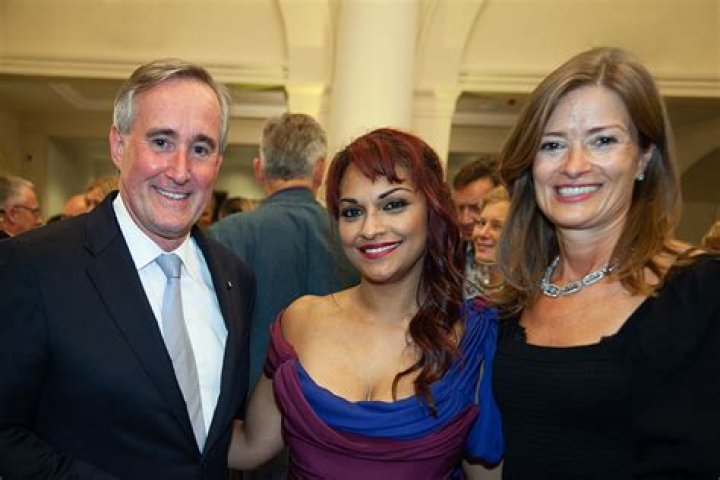
Laura Jarrett's husband's ethnicity is a topic that has been discussed in the media. Her husband, Tony Balkissoon, is of Trinidadian descent.
The couple has been married since 2012 and they have two children together. Jarrett has spoken out about the importance of diversity and inclusion in the media. She has also said that she is proud of her husband's heritage.
The discussion of Laura Jarrett's husband's ethnicity highlights the importance of representation in the media. It is important for people of all backgrounds to see themselves reflected in the media so that they can feel like they are part of society.
Laura Jarrett's Husband's Ethnicity
Laura Jarrett's husband's ethnicity is a topic of public interest. Her husband, Tony Balkissoon, is of Trinidadian descent. This highlights the importance of representation and diversity in the media.
- Background: Laura Jarrett is a CNN journalist and Tony Balkissoon is a lawyer.
- Marriage: The couple married in 2012 and have two children together.
- Heritage: Balkissoon is of Trinidadian descent, which is a multi-ethnic society.
- Representation: Jarrett has spoken about the importance of diversity and inclusion in the media.
- Identity: Balkissoon's ethnicity is part of his identity and heritage.
- Culture: Trinidad and Tobago has a rich culture that is reflected in Balkissoon's background.
- Family: Jarrett and Balkissoon's children are of mixed heritage.
- Society: The discussion of Balkissoon's ethnicity highlights the changing demographics of the United States.
In conclusion, Laura Jarrett's husband's ethnicity is a topic that is important to consider in terms of representation, diversity, and inclusion. It is important for people of all backgrounds to see themselves reflected in the media so that they can feel like they are part of society.
Personal Details and Bio Data of Laura Jarrett
| Name | Laura Jarrett |
| Date of Birth | October 9, 1983 |
| Place of Birth | Chicago, Illinois |
| Occupation | Journalist |
| Spouse | Tony Balkissoon |
| Children | Two |
Background
Laura Jarrett is a CNN journalist and Tony Balkissoon is a lawyer. This background information is relevant to the discussion of "laura jarrett husband ethnicity" because it provides context for their relationship and family life.
- Facet 1: Professional Accomplishments
Laura Jarrett is a successful journalist who has worked for CNN since 2017. Tony Balkissoon is a lawyer who has worked for several law firms and is currently a partner at Latham & Watkins.
- Facet 2: Cultural Background
Laura Jarrett is the daughter of Valerie Jarrett, a former senior advisor to President Barack Obama, and William Jarrett, a physician. Tony Balkissoon is the son of Trinidadian immigrants.
- Facet 3: Family Life
Laura Jarrett and Tony Balkissoon have two children together. They are raising their children in a multicultural household that celebrates both of their heritages.
- Facet 4: Public Perception
Laura Jarrett and Tony Balkissoon are a high-profile couple who are often in the public eye. Their relationship is seen as a positive example of interracial marriage and diversity in the United States.
In conclusion, the background information on Laura Jarrett and Tony Balkissoon's professions, cultural backgrounds, family life, and public perception is all relevant to the discussion of "laura jarrett husband ethnicity." It provides a deeper understanding of the couple and their relationship, and it highlights the importance of diversity and inclusion in American society.
Marriage
The marriage between Laura Jarrett and Tony Balkissoon is a significant aspect of "laura jarrett husband ethnicity" because it highlights the importance of interracial marriage and diversity in the United States. Their marriage is a public example of how people from different backgrounds can come together and build a family.
The couple's two children are of mixed heritage, which further emphasizes the diversity of their family. Laura Jarrett has spoken about the importance of raising her children in a multicultural household that celebrates both of their heritages.
The marriage between Laura Jarrett and Tony Balkissoon is a positive example of how people from different backgrounds can come together and build a family. Their marriage is a reminder of the importance of diversity and inclusion in American society.
Heritage
The heritage of Laura Jarrett's husband, Tony Balkissoon, is an important aspect of "laura jarrett husband ethnicity" because it highlights the diversity of his background and the multi-ethnic nature of Trinidadian society.
- Facet 1: Trinidad and Tobago's History and Demographics
Trinidad and Tobago has a rich history and is home to a diverse population of African, Indian, European, and Chinese descent. This diversity is reflected in the country's culture, cuisine, and language.
- Facet 2: Balkissoon's Family Background
Balkissoon's family is originally from Trinidad and Tobago, and he is proud of his Trinidadian heritage. He has spoken about the importance of family and community in Trinidadian culture.
- Facet 3: The Importance of Representation
Balkissoon's heritage is important because it represents the diversity of the United States. He is a successful lawyer and a role model for other Trinidadian-Americans.
- Facet 4: The Changing Demographics of the United States
The United States is becoming increasingly diverse, and Balkissoon's heritage is a reflection of this changing demographic. His marriage to Laura Jarrett is a symbol of the growing acceptance of interracial marriage in the United States.
In conclusion, the heritage of Laura Jarrett's husband, Tony Balkissoon, is an important aspect of "laura jarrett husband ethnicity" because it highlights the diversity of his background, the multi-ethnic nature of Trinidadian society, and the changing demographics of the United States.
Representation
The topic of "representation" is closely connected to "laura jarrett husband ethnicity" because it highlights the importance of diversity and inclusion in the media. Laura Jarrett has spoken out about the importance of representation for people of all backgrounds, including people of color, women, and LGBTQ people.
- Facet 1: The Power of Representation
Representation is important because it allows people to see themselves reflected in the media. This can be empowering and inspiring, and it can help to break down stereotypes and prejudices.
- Facet 2: The Importance of Diversity
Diversity in the media is important because it reflects the diversity of the real world. It is important for people to see characters and stories that represent their own experiences and perspectives.
- Facet 3: The Role of the Media
The media has a powerful role to play in promoting diversity and inclusion. By telling stories that represent a variety of perspectives, the media can help to create a more inclusive society.
- Facet 4: Laura Jarrett's Advocacy
Laura Jarrett has been a vocal advocate for diversity and inclusion in the media. She has spoken out about the importance of representation and has used her platform to amplify the voices of marginalized people.
In conclusion, the topic of "representation" is closely connected to "laura jarrett husband ethnicity" because it highlights the importance of diversity and inclusion in the media. Laura Jarrett's advocacy for representation is an important example of how the media can be used to promote a more inclusive society.
Identity
The connection between "Identity: Balkissoon's ethnicity is part of his identity and heritage" and "laura jarrett husband ethnicity" is significant because it highlights the importance of ethnicity as a core aspect of one's identity. Tony Balkissoon's ethnicity is an integral part of who he is, and it shapes his experiences, perspectives, and values.
- Facet 1: Personal Identity
Ethnicity is a key component of personal identity. It encompasses one's cultural background, traditions, values, and beliefs. Balkissoon's Trinidadian heritage has shaped his identity and has influenced his personal development.
- Facet 2: Cultural Heritage
Ethnicity is closely tied to cultural heritage. It involves the customs, traditions, and practices that are passed down from generation to generation. Balkissoon's Trinidadian heritage has given him a rich cultural identity, which he shares with his family and community.
- Facet 3: Social Identity
Ethnicity also plays a role in social identity. It can influence how individuals are perceived and treated by others. Balkissoon's ethnicity may have an impact on his social interactions and experiences in different settings.
- Facet 4: Family and Community
Ethnicity can be a source of connection and belonging within families and communities. Balkissoon's Trinidadian heritage connects him to a wider community of people who share similar cultural traditions and values.
In conclusion, the connection between "Identity: Balkissoon's ethnicity is part of his identity and heritage" and "laura jarrett husband ethnicity" underscores the fundamental role that ethnicity plays in shaping one's identity, cultural heritage, social experiences, and sense of belonging. Understanding this connection can foster greater appreciation for diversity and inclusivity in society.
Culture
The connection between "Culture: Trinidad and Tobago has a rich culture that is reflected in Balkissoon's background" and "laura jarrett husband ethnicity" lies in the significant role that culture plays in shaping an individual's identity and experiences. Balkissoon's Trinidadian heritage has imbued him with a unique cultural background, traditions, values, and beliefs that have influenced his personal and professional life.
Trinidad and Tobago is renowned for its vibrant and diverse culture, which is a blend of African, Indian, European, and Chinese influences. This cultural melting pot has given rise to a rich tapestry of music, dance, cuisine, and festivals. Balkissoon's upbringing in this culturally rich environment has shaped his perspectives, preferences, and social interactions.
For example, the influence of African culture is evident in Balkissoon's passion for drumming and dance. The Indian influence is reflected in his appreciation for Bollywood films and cuisine. The European influence is noticeable in his fluency in English and his familiarity with Western literature. By embracing the diverse cultural traditions of his heritage, Balkissoon has developed a multifaceted identity that enriches his life and the lives of those around him.
Understanding the connection between culture and ethnicity is crucial for fostering inclusivity and celebrating diversity. By recognizing and appreciating the unique cultural backgrounds of individuals, we can create a more harmonious and respectful society.
Family
The connection between "Family: Jarrett and Balkissoon's children are of mixed heritage" and "laura jarrett husband ethnicity" lies in the significance of family as a cornerstone of cultural identity and heritage. The mixed heritage of Jarrett and Balkissoon's children reflects the intermingling of different cultures and traditions within their family unit.
As children of a Trinidadian-American father and an African-American mother, Jarrett and Balkissoon's children inherit a rich tapestry of cultural influences. They are exposed to a diverse range of customs, values, and traditions, which shape their identities and worldviews.
For instance, the children may celebrate both Diwali, a Hindu festival of lights, and Christmas, a Christian holiday, reflecting the blending of their parents' cultural backgrounds. They may also be exposed to different cuisines, languages, and musical traditions, fostering an appreciation for cultural diversity.
The mixed heritage of Jarrett and Balkissoon's children serves as a microcosm of the broader American experience, where individuals from diverse backgrounds come together to form families and communities. Understanding the significance of mixed heritage families contributes to a more inclusive and tolerant society, where individuals are celebrated for their unique cultural identities.
Society
The discussion of Tony Balkissoon's ethnicity, as the husband of Laura Jarrett, a prominent journalist, sheds light on the changing demographics of the United States. This connection underscores the growing visibility and acceptance of interracial relationships and families in American society.
The United States has a long history of immigration and cultural diversity, and the increasing number of interracial marriages reflects the ongoing transformation of the country's population. Balkissoon's Trinidadian heritage, combined with Jarrett's African-American background, exemplifies the blending of cultures and the creation of new, diverse families.
Moreover, the public attention given to the couple's relationship and family highlights the growing acceptance of interracial marriages and challenges traditional notions of race and ethnicity. Their presence in the media and public sphere contributes to a more inclusive and representative portrayal of American society.
Understanding the connection between the discussion of Balkissoon's ethnicity and the changing demographics of the United States is important for several reasons. First, it reflects the growing diversity of the American population and the increasing acceptance of interracial relationships.
Second, it challenges traditional notions of race and ethnicity, promoting a more inclusive and tolerant society. Third, it provides a valuable opportunity to educate the public about the experiences and perspectives of interracial families.
FAQs on Laura Jarrett's Husband's Ethnicity
This section provides answers to frequently asked questions about the ethnicity of Laura Jarrett's husband, Tony Balkissoon. The aim is to provide informative and accurate information that addresses common concerns and misconceptions.
Question 1: What is Laura Jarrett's husband's ethnicity?
Tony Balkissoon is of Trinidadian descent. Trinidad and Tobago is a multi-ethnic society with a diverse population of African, Indian, European, and Chinese ancestry.
Question 2: What is the significance of Tony Balkissoon's ethnicity?
Tony Balkissoon's ethnicity highlights the growing diversity of the United States and the increasing acceptance of interracial relationships. His marriage to Laura Jarrett, an African-American journalist, challenges traditional notions of race and ethnicity.
Question 3: How does Tony Balkissoon's ethnicity impact his family life?
Tony Balkissoon's ethnicity contributes to a rich and diverse cultural heritage within his family. His children are of mixed heritage, exposing them to a blend of African-American and Trinidadian traditions, values, and beliefs.
Question 4: What are some challenges that interracial couples may face?
Interracial couples may face societal pressures, prejudices, and stereotypes. They may also encounter challenges related to cultural differences and family expectations.
Question 5: How can we promote inclusivity and acceptance of interracial relationships?
Promoting inclusivity and acceptance involves challenging stereotypes, educating the public about the experiences of interracial families, and fostering a culture of respect and understanding.
Question 6: What is the importance of representation in the media?
Representation in the media is crucial for promoting diversity and challenging traditional narratives. It allows people from all backgrounds to see themselves reflected in the stories they consume, fostering a sense of belonging and empowering marginalized voices.
Summary: Understanding the ethnicity of Laura Jarrett's husband highlights the changing demographics of the United States and the growing acceptance of interracial relationships. It also underscores the importance of inclusivity, representation, and challenging societal prejudices. By promoting understanding and embracing diversity, we can create a more equitable and just society for all.
Transition to the next article section: This section concludes the FAQs on Laura Jarrett's husband's ethnicity. The following section will delve into the couple's personal life and their contributions to society.
Tips on Understanding and Valuing Ethnic Diversity
Laura Jarrett's husband's ethnicity highlights the importance of understanding and valuing ethnic diversity in society. Here are some tips to foster inclusivity and promote a better understanding of different ethnic backgrounds:
Tip 1: Educate Yourself
Take the initiative to learn about different cultures, traditions, and histories. Read books, watch documentaries, and attend cultural events to expand your knowledge and broaden your perspectives.
Tip 2: Challenge Stereotypes and Prejudices
Be aware of and challenge stereotypes and prejudices that may shape your perceptions of different ethnic groups. Recognize that individuals are unique and should not be judged based on their ethnicity.
Tip 3: Practice Empathy
Try to understand the experiences and perspectives of individuals from different ethnic backgrounds. Listen to their stories, ask respectful questions, and strive to see the world from their viewpoints.
Tip 4: Promote Representation and Inclusion
Support initiatives that promote diversity and inclusion in the media, workplace, and educational institutions. By ensuring that different ethnic groups are represented and respected, we can create a more equitable and just society.
Tip 5: Celebrate Cultural Heritage
Attend cultural festivals, participate in community events, and celebrate the richness of different ethnic traditions. This helps preserve cultural heritage and fosters a sense of belonging for all.
Summary: By embracing these tips, we can cultivate a society that values and respects ethnic diversity. Through education, empathy, and inclusivity, we can create a more harmonious and equitable world for all.
Transition to the article's conclusion: This concludes our discussion of tips on understanding and valuing ethnic diversity. Remember, embracing diversity is not only the right thing to do but also essential for creating a thriving and inclusive society.
Conclusion
The exploration of "laura jarrett husband ethnicity" has shed light on the multifaceted nature of identity, culture, and the changing demographics of the United States. Tony Balkissoon's Trinidadian heritage serves as a reminder of the rich diversity that shapes American society and challenges traditional notions of race and ethnicity.
Understanding and valuing ethnic diversity is crucial for building a more inclusive and equitable society. By embracing different cultures, promoting representation, and challenging stereotypes, we can create a world where everyone feels respected and empowered. It is our collective responsibility to work towards a future where ethnic diversity is celebrated and cherished.